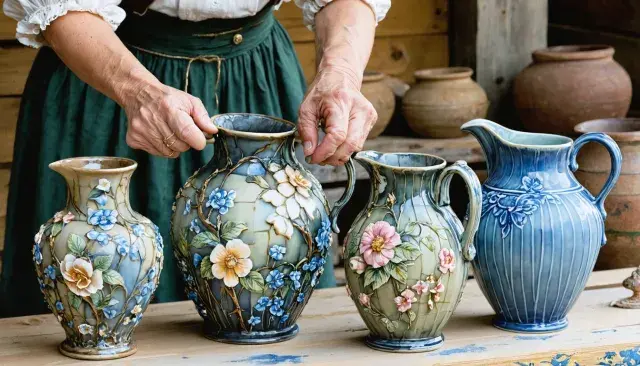
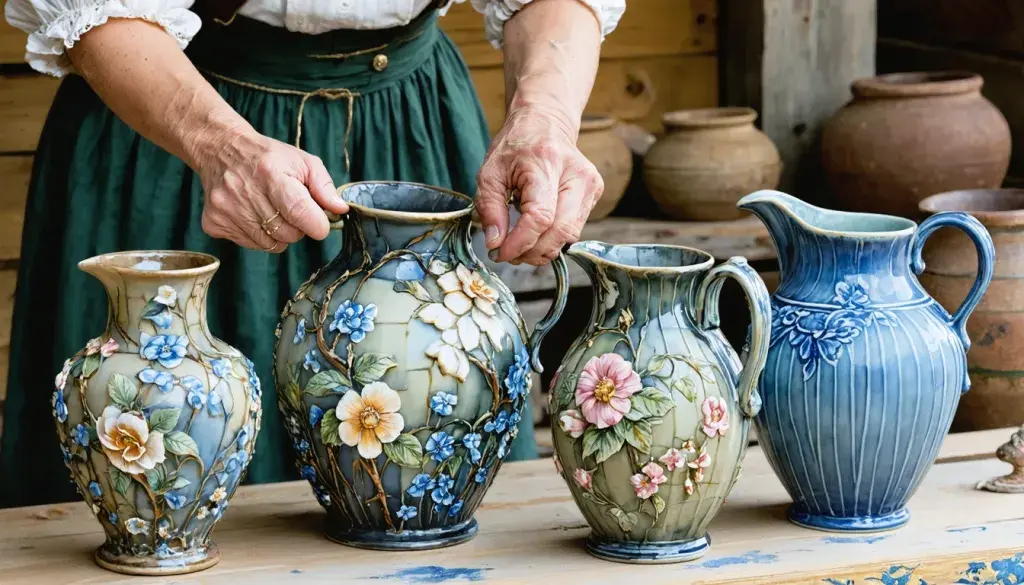
In the late 1800s, Arabella Walker, a farmwoman in South Carolina, created five remarkable jars and pitchers known as memory jugs by pressing discarded china shards into clay harvested from a nearby creek. These folk art treasures, blending personal mementos with utilitarian stoneware, offer a window into Victorian-era creativity and Southern cultural traditions, reminding us today of women's inventive hobbies amid rising domestic leisure.
The Unique Process Behind Arabella's Memory Jugs
Walker gathered broken china fragments found around her farmhouse and embedded them into gray clay dug from the creek bottom, transforming ordinary stoneware into textured masterpieces. Unlike standard vases, one of her pieces features a glass-backed design with a hanging hole, adding functionality to its decorative chaos. A descendant later recreated the craft using arrowheads and Native American pottery from the same farm, preserving this hands-on tradition.
Origins and Evolution of Memory Jugs
Memory jugs emerged in the late 19th century, evolving from African American grave decorations to popular home crafts across the South, with instructions appearing in Godey's Lady's Book during the 1870s-1890s. Fueled by Victorian obsessions with scrapbooking and collecting, they peaked as women gained time from household inventions. Items pressed into the clay—ceramics, coins, toys, nuts, bolts—personalize each jug, evoking the maker's or honoree's life story.
- Coins and dated tokens provide key dating clues, like a 1887 engraving or 1922 token.
- Imprints from lost items, such as toy horses, add mystery and charm.
- Examples found beyond the Deep South, including Baltimore with a fire marshal badge.
Cultural Insights from Historian Dr. Rodger Stroup
South Carolina historian Dr. Rodger Stroup, who curated exhibits on funerary customs at the State Museum, notes the shift in understanding: from death-focused African American artifacts to broader craft forms. Despite scarcity—many dismissed as trash by auctioneers—their survival reveals personal histories. Stroup's collection includes a 1950s jug with Cracker Jack prizes, highlighting endurance into modern times amid limited scholarly research.
Legacy and Hunt for Hidden Treasures Today
These jugs connect to broader trends in folk art revival, inspiring online tutorials and exhibits at places like the Diggs Gallery. Collectors scour eBay, auctions, and antique malls for originals, valuing their regional anonymity as part of the allure. Arabella Walker's works underscore how everyday women turned scraps into enduring cultural statements, bridging 19th-century domesticity with contemporary appreciation for vernacular creativity.