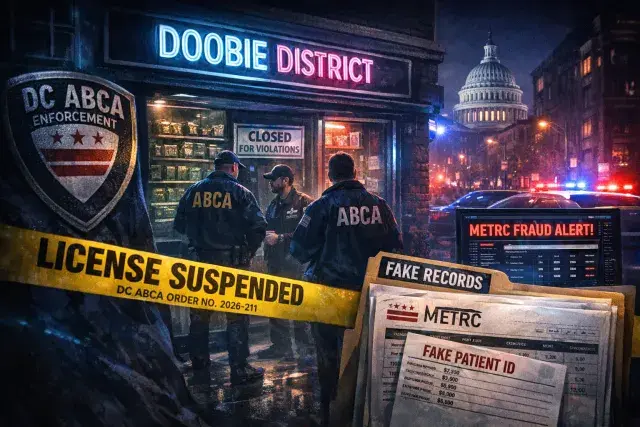
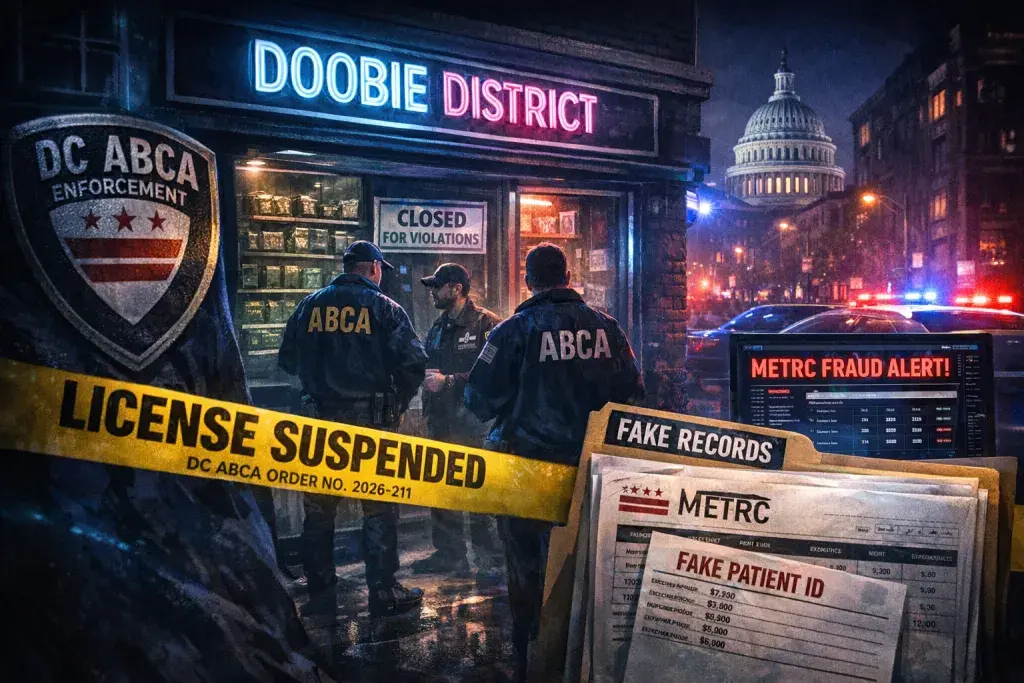
The District of Columbia Alcoholic Beverage and Cannabis Board has suspended the medical cannabis license of Doobie District, a U Street retailer, for 30 days after uncovering sales to unqualified buyers and falsified entries in the mandatory tracking system. This action, detailed in Order No. 2026-211 issued February 11, 2026, underscores the strict oversight governing D.C.'s medical cannabis program amid rising recreational legalization debates. The violations erode public trust in a tightly regulated market designed to protect patients and ensure compliance.
Undercover Probe Reveals Verification Failures
An investigation began on May 9, 2025, when the Alcoholic Beverage and Cannabis Administration received tips that Doobie District, operated by KLM, LLC at 1526 U Street NW, sold medical cannabis without checking credentials. Undercover agents made two controlled purchases of confirmed medical product from a licensed cultivator. Staff completed the transactions without requesting medical cards or caregiver proof, a direct breach of D.C. regulations under 22-C DCMR § 5709.5.
Labels on the packages bore the name and patient ID of a Doobie District employee, not the buyers. Further checks showed this employee's METRC account—D.C.'s seed-to-sale tracking system—recorded purchases exceeding the 8-ounce limit per patient over 30 days. Two other accounts linked to the same credentials also showed overselling, pointing to systemic manipulation.
Falsified Records Violate Core Tracking Rules
The Board upheld charges of entering false information into METRC, violating 22-C DCMR § 5615.3, which demands accurate, real-time data. This system tracks cannabis from cultivation to sale, preventing diversion to illicit markets and ensuring only qualified patients access medical products. Falsification undermines the program's integrity, risking patient safety and exposing unqualified individuals to unverified substances.
Doobie District stipulated to the facts but contested the penalty. Principal owner Peter Murillo testified at the show cause hearing about an internal probe that led to firing implicated staff, retraining others, and new oversight like weekly sales monitoring. The Board acknowledged these steps but held ownership accountable for supervision lapses.
Penalty Balances Accountability with Remediation
Revocation was considered but rejected, given evidence of unauthorized employee actions. Instead, the 30-day suspension takes effect immediately, with owners required to complete ABCA-approved training within 60 days. Noncompliance could reinstate the suspension.
This case highlights tensions in D.C.'s dual medical-recreational framework, where medical sales demand rigorous patient verification to distinguish them from adult-use. As cannabis policy evolves, such enforcement reinforces that licensees bear full responsibility, deterring shortcuts that could fuel black-market activity or compromise medical access standards.