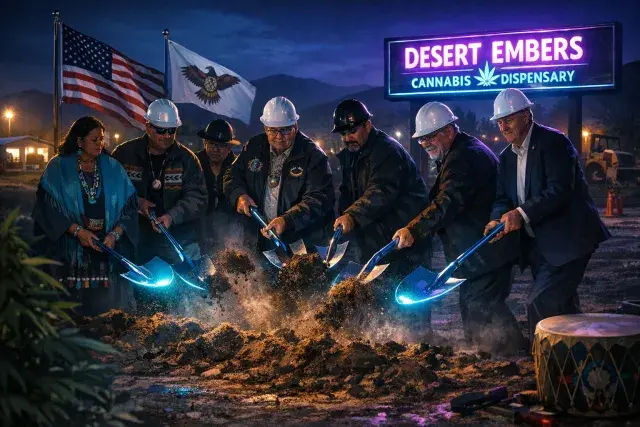
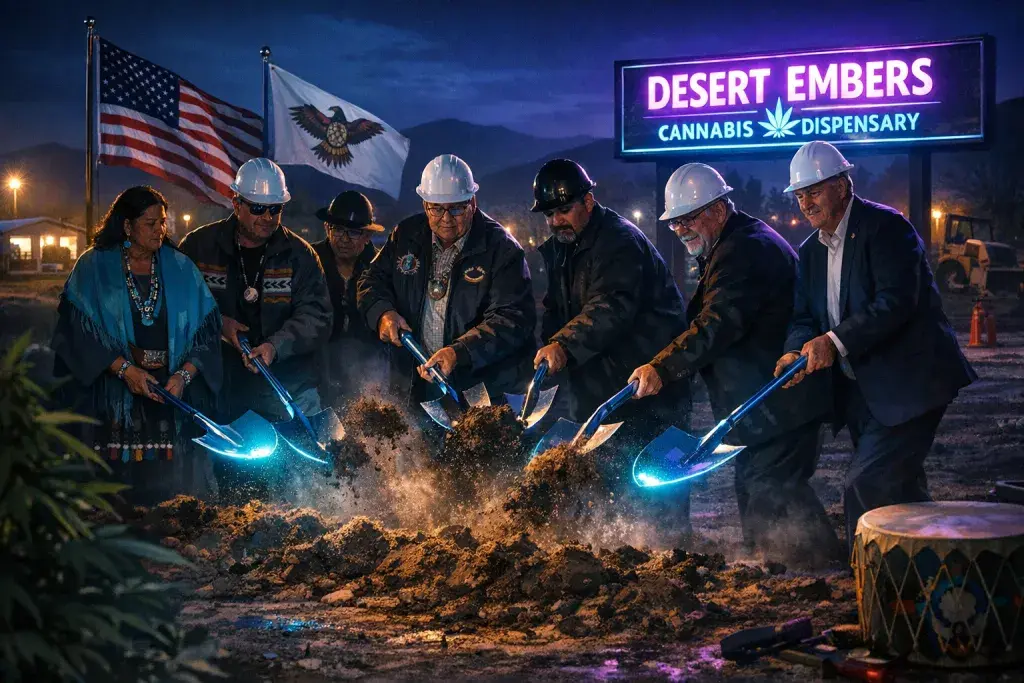
The Fallon Paiute Shoshone Tribe marked a key step in economic development Friday with a groundbreaking ceremony for a new marijuana dispensary on the southwest corner of Bottom Road and the Reno Highway, west of Fallon, Nevada. Tribal leaders expect the initial modular facility to open within several months, paving the way for a permanent structure. This project reflects the tribe's calculated entry into Nevada's regulated cannabis market, driven by prospects for jobs and revenue.
Strategic Location and Phased Construction
Cody Downs, president of the Fallon Tribal Development Corporation board, explained that the tribe selected the site for its potential to generate taxes and foster growth. The dispensary will start as a prefabricated building positioned at the rear of the property, serving as a temporary setup until a full permanent building replaces it. Downs indicated the development council aims for completion in about two months, though no firm date exists yet. The ceremony drew tribal council members and Fallon Mayor Ken Tedford, underscoring local support for the initiative.
Overcoming Hesitation in a Regulated Industry
The tribe once approached dispensaries with caution, but observations from nearby towns shifted that view. Leaders noted no spikes in crime or other problems in those areas, bolstering confidence. Nevada's state oversight of the medical marijuana sector provides a structured framework, which Downs affirmed the tribe will follow completely. As federally recognized sovereign nations, Nevada tribes hold authority to negotiate compacts with the state on marijuana operations, enabling this tribally controlled venture named Desert Embers.
Empowering Tribal Sovereignty and Economy
Downs described the dispensary as a tribally owned cornerstone that creates jobs for members and channels revenue into core tribal services. It embodies self-determination, blending economic opportunity with cultural heritage on tribal land. This move positions the Fallon Paiute Shoshone Tribe to thrive in Nevada's expanding cannabis economy, where state regulation balances public safety with business viability. By asserting sovereign rights, the tribe charts a path for sustainable growth amid broader legalization trends.