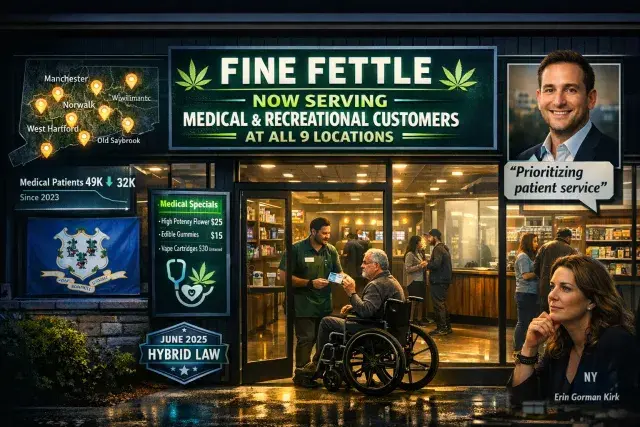
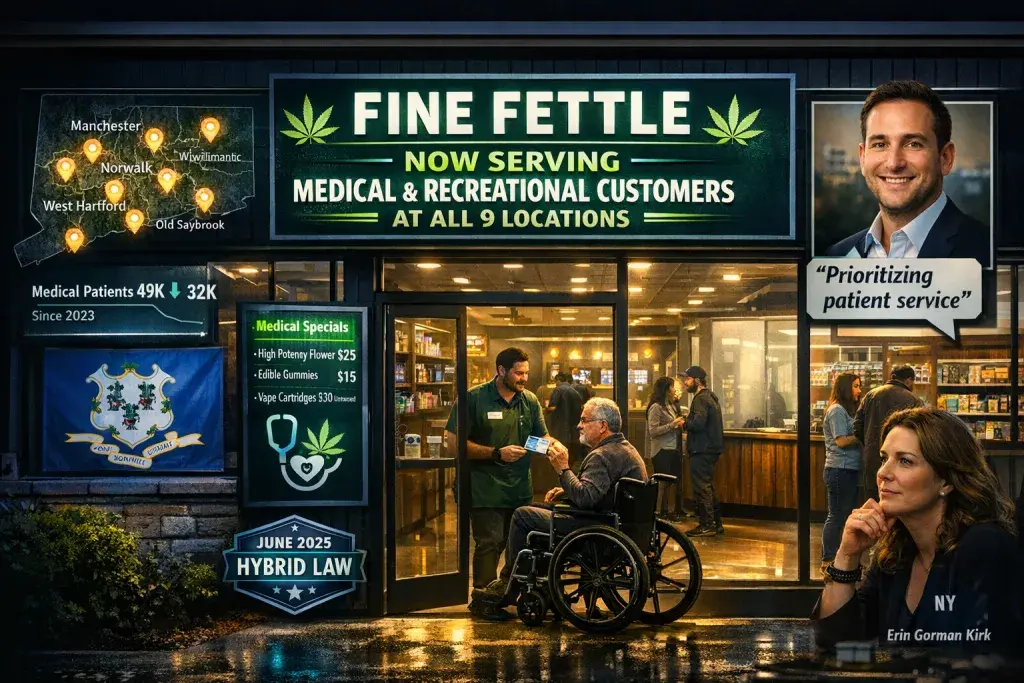
Fine Fettle, a leading cannabis dispensary operator, is transitioning its remaining recreational-only shops in Connecticut to hybrid models this week, enabling medical cannabis patients to access products at all nine locations. This move addresses declining medical program participation and aims to bolster patient access amid shifting market dynamics.
Key Details of the Expansion
Fine Fettle's dispensaries in Manchester, Norwalk, Old Saybrook, Waterbury, and West Hartford—previously recreational-only—now serve medical patients alongside recreational customers. The company's other four stores in Bristol, Newington, Stamford, and Willimantic were already hybrid.
- Requires private consultation spaces, staff retraining, remote verification systems, and expanded inventory.
- New menus cater specifically to medical needs, with lower prices and untaxed sales for patients.
- Chief Operating Officer Ben Zachs emphasized prioritizing patient service to counter program erosion.
Declining Medical Cannabis Participation
Since recreational sales launched in early 2023, Connecticut's registered medical cannabis patients have plummeted from nearly 49,000 to under 32,000. Total cannabis revenue dipped to $290 million in 2025 from $293 million in 2024, despite recreational gains of $17.5 million; medical sales fell $21 million.
Experts attribute this to patients letting registrations lapse without shifting to recreational markets. Many seek higher-potency products unavailable in Connecticut, turning to neighboring states like New York or Rhode Island, or unregulated sources such as online vapes and hemp at gas stations. Cannabis ombudsman Erin Gorman Kirk highlights interstate competition as a key pressure.
Legislative Support and Operational Shifts
June 2025 legislation streamlined conversions by waiving lotteries for hybrid licenses and easing pharmacist requirements: now one eight-hour in-person shift weekly, supplemented by telehealth. This allows Fine Fettle to maintain staffing while expanding reach, avoiding pharmacist reductions.
Despite setup costs and thinner medical margins, Zachs views it as a growth driver, fostering loyalty through superior service and drawing recreational customers via word-of-mouth.
Implications for Patients and the Market
Hybrid expansion improves convenience, potentially curbing out-of-state travel and supporting chronic condition management with tailored, potent options. In public health terms, it promotes safer, regulated access over illicit alternatives, aligning with trends toward integrated cannabis ecosystems.
Connecticut's move signals maturing regulation, prioritizing patient retention amid recreational dominance. If successful, it could stabilize revenues, influence competitors, and model accessible medical programs nationwide, where patient drop-offs post-recreational legalization are common.