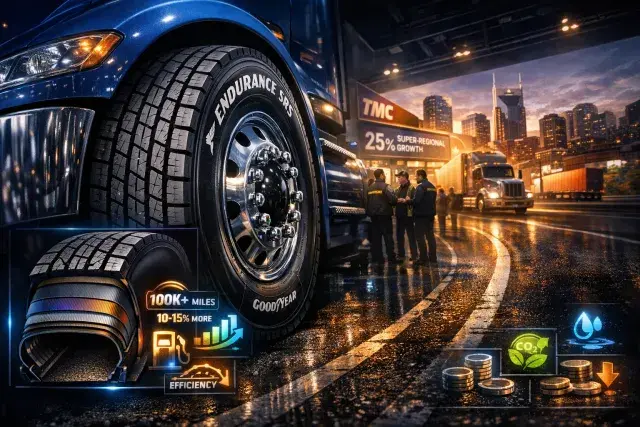
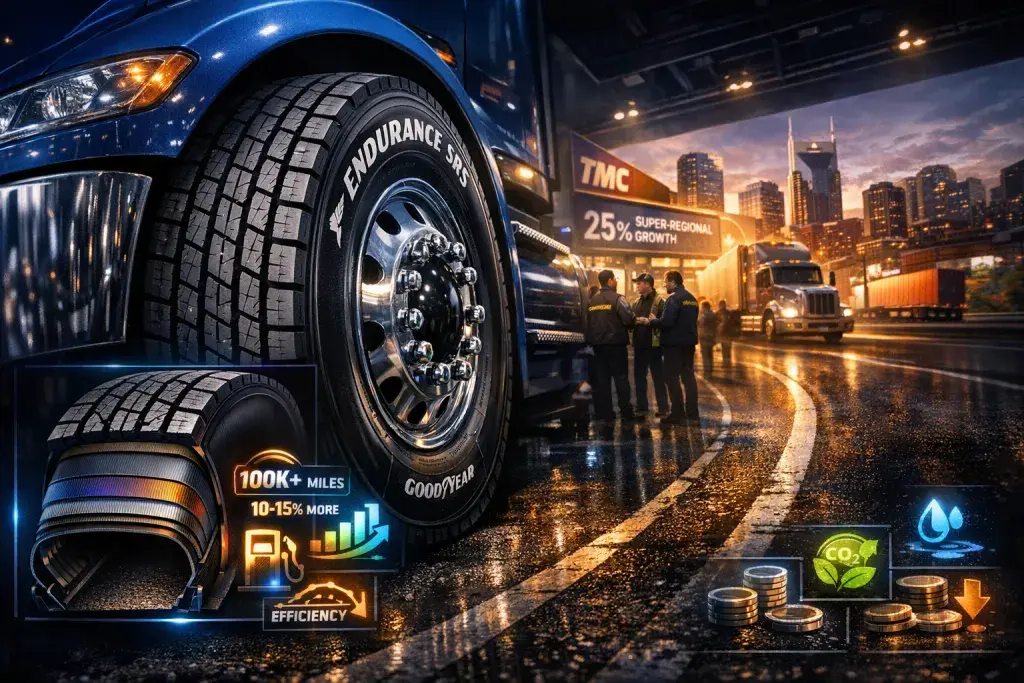
At the Technology & Maintenance Council Annual Meeting in Nashville, Goodyear previewed its upcoming Endurance SRS (Super Regional Steer) tire, tailored for fleets navigating the expanding super-regional segment. This innovation addresses the fusion of regional and linehaul operations, offering tires that balance mileage, durability, and efficiency amid shifting freight patterns.
The Rise of Super-Regional Operations
Trucking fleets increasingly blur traditional boundaries between regional hauls—short, stop-start routes with urban scuffing—and linehaul's long, highway-dominant runs. Driver reluctance to endure weeks-long trips has fueled more regional work, yet e-commerce and just-in-time logistics push trucks to cover 500 miles daily with mixed duties. This evolution demands tires that resist irregular wear while optimizing fuel economy, a challenge as fleets seek 20-30% longer tire life to cut costs amid rising fuel prices and driver shortages.
Engineered for Mixed-Duty Demands
The Endurance SRS steer tire incorporates targeted features for super-regional rigs:
- Advanced tread compound to combat wear in high-scrub environments
- Rib-edge sipes for even wear distribution and extended mileage
- 20/32-inch tread depth suited for regional longevity
- Pressure distribution grooves to minimize shoulder wear
These elements strike a balance: linehaul tires prioritize steady rolling resistance for fuel savings, but super-regional needs add turning and braking stresses. Early testing shows potential for 10-15% more removable miles without sacrificing casing retreadability, vital as fleets average 100,000+ annual miles per tractor.
Fleet Feedback Shapes the Future
Goodyear developed the SRS directly from operator input, filling the gap between regional and linehaul products. As super-regional fleets grow—projected to represent 25% of U.S. operations by 2025 per industry forecasts—this tire could reduce downtime and total ownership costs. Broader implications include safer roads through better traction in varied conditions and sustainability gains from fewer tire replacements, aligning with pressures for greener trucking amid regulatory scrutiny on emissions.