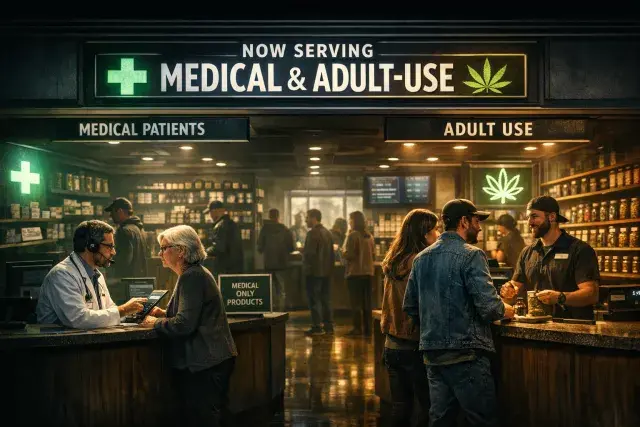
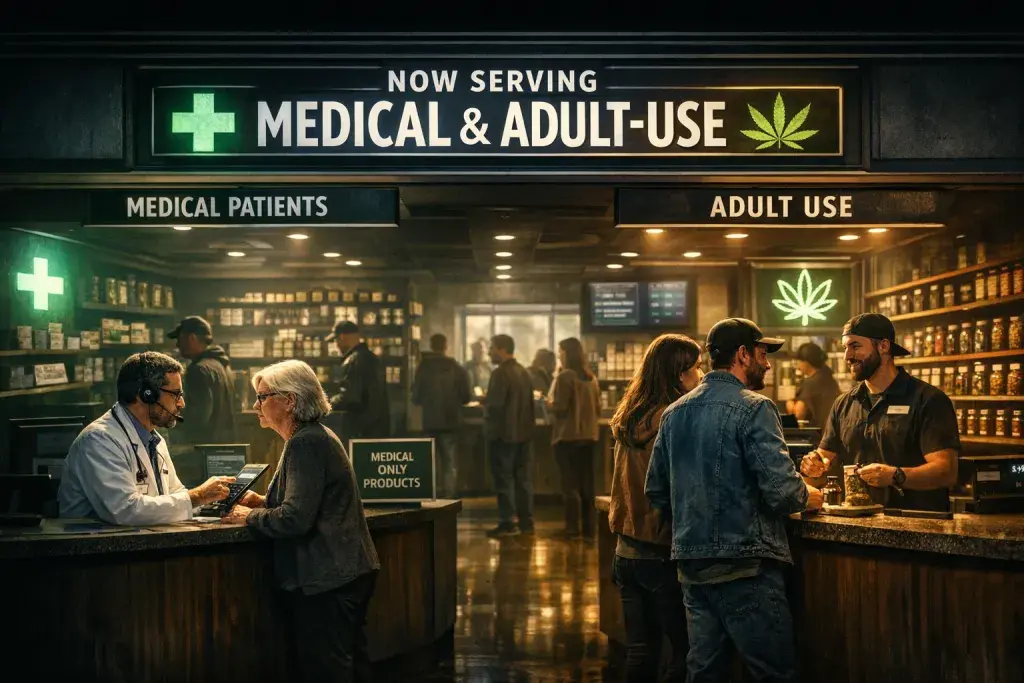
Fine Fettle has transformed all nine of its Connecticut cannabis dispensaries into hybrid facilities, enabling them to accommodate both registered medical marijuana patients and adult-use buyers. This shift, enabled by state legislation passed last year, expands access to medical services in regions previously limited to recreational sales only. Company leaders emphasize that the change bolsters Connecticut's medical program without compromising care quality.
Legislative Shift Enables Broader Operations
Connecticut's Responsible Expansion of RERACA law, enacted last year, permits recreational dispensaries to convert to hybrid models starting October 1. The legislation also allows pharmacists to verify patients and conduct private consultations remotely, reducing the need for constant on-site presence. Fine Fettle seized this opportunity after six months of preparation, including 15 state inspections, new standard operating procedures, technology upgrades, and staffing adjustments to ensure compliance.
Previously, five locations in Manchester, Norwalk, Old Saybrook, Waterbury, and West Hartford served only adult-use customers. Sites in Newington, Bristol, Stamford, and Willimantic already operated as hybrids. Now, every facility offers medical patients tax-free pricing, access to stronger medical-only products, and dedicated registers.
Enhanced Access for Medical Patients
Medical patients gain the most from this expansion, particularly in underserved areas. Each hybrid dispensary provides pharmacist access during all operating hours: at least one on-site for eight contiguous hours weekly, with remote coverage for the rest. Patients can seek consultations at registers or in private spaces to discuss needs and ask questions.
Benjamin Zachs, Fine Fettle's chief operating officer, stated that the model addresses gaps where medical options were scarce. "This change allows us to continue fulfilling our mission of accessible, compassionate care while strengthening the state’s medical program," he said. The company also introduced discounts for new medical patients on their first three purchases within a set period.
Balancing Medical and Recreational Demands
The hybrid approach promotes efficiency and equity, as Zachs described it, by serving both groups responsibly. Medical patients avoid state taxes on recreational sales and access specialized products, preserving program integrity amid Connecticut's growing adult-use market. Fine Fettle, which operates in Connecticut, Massachusetts, and Georgia, views the costs of conversion—including build-out, technology, and staffing—as justified for patient benefits.
This development reflects broader trends in state cannabis policy, where lawmakers balance expanding recreational access with sustaining medical frameworks. By integrating remote pharmacist services, Connecticut eases operational burdens on operators while upholding care standards, potentially setting a model for other states navigating similar transitions.