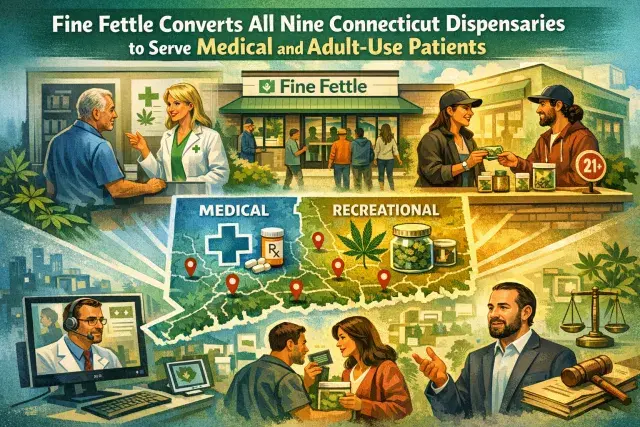
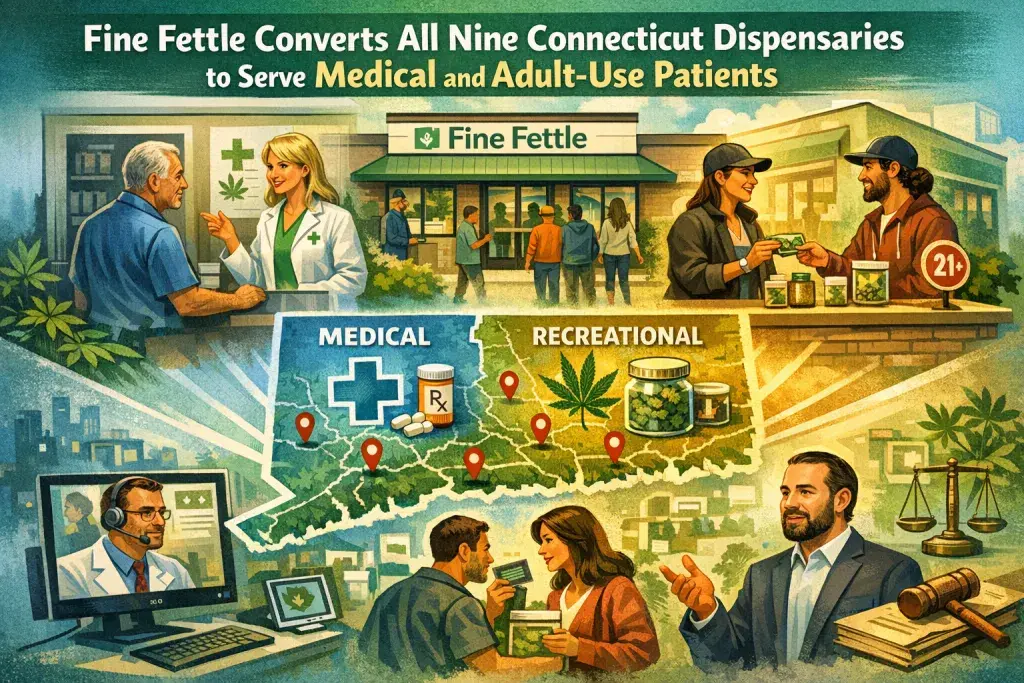
Fine Fettle has flipped every one of its nine Connecticut cannabis dispensaries into hybrid operations, a direct response to state law tweaks that now let these spots cater to both registered medical patients and recreational buyers. The shift, completed across locations from Bristol to Stamford, promises better access for patients who previously faced slim pickings in certain towns. What's driving this—and what it means for Connecticut's bifurcated cannabis market—hinges on last year's legislative nudge toward equity.
From Recreational-Only to Full Hybrid Access
Four of Fine Fettle's sites—Newington, Bristol, Stamford, and Willimantic—were already hybrids, humming along with both patient and adult-use sales. The real change hits the other five: Manchester, Norwalk, Old Saybrook, Waterbury, and West Hartford. These had stuck to recreational sales alone; now they welcome medical patients, who gain entree to potent, medical-only products, tax exemptions, and discounted pricing that recreational buyers can't touch.
Benjamin Zachs, the company's chief operating officer, frames it as mission-critical expansion. "This change allows us to continue fulfilling our mission of accessible, compassionate care while strengthening the state’s medical program," he said. In spots like Waterbury or Old Saybrook, where medical options were scarce, patients no longer need to trek across counties for specialized care.
Pharmacist Backbone Meets Remote Flexibility
Connecticut law demands pharmacist access at hybrid dispensaries—non-negotiable for patient verification and consultations. Fine Fettle meets this with a dedicated medical register at each spot, plus a licensed pharmacist either on-site or piped in remotely during all hours. "At minimum, each store will have one pharmacist on site for a contiguous eight hours per week and remote access covering 100% of hours open," Zachs explained.
Patients can quiz staff at the register or duck into private consultation rooms for deeper talks on dosing or conditions. This setup stems from 2023's RERACA revisions, which greenlit recreational outlets to go hybrid starting October 1 and eased rules to allow remote pharmacist duties. No longer chained to in-person mandates, operators like Fine Fettle can stretch coverage thin but effectively—across all nine stores, not just a handful.
Six Months of Prep, Eyes on Patient Equity
The conversion wasn't a flip of a switch. Fine Fettle logged six months of groundwork: 15 state inspections, revamped standard operating procedures, fresh tech for remote verification, staffing tweaks, and pharmacist scheduling. "This took much planning, including figuring out remote verification... Yes, there were definitely some affiliated costs on build out, technology and staffing, but we think it’s worth it for the betterment of Connecticut’s medical marijuana patients and program," Zachs said.
For new medical patients, perks include promotional discounts on the first three purchases within a set window. The upshot? Efficiency that bridges recreational boom times—Connecticut's adult-use market has surged since legalization—with a medical program at risk of withering. Hybrid models like this keep tax-free, high-potency options alive, ensuring patients aren't priced out or short on supply. Fine Fettle, with outposts in Massachusetts and Georgia too, positions Connecticut as a testing ground for balanced dual-market operations.