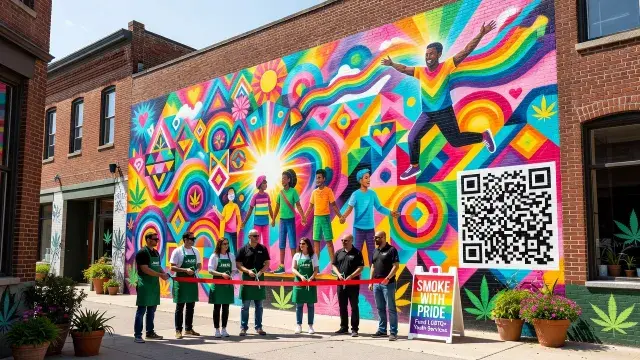
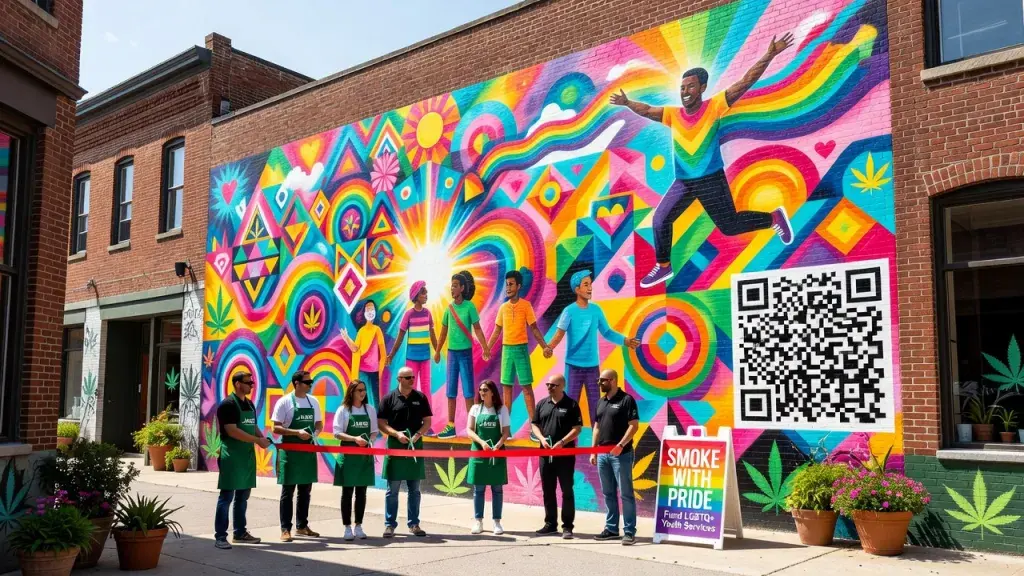
Two Michigan cannabis retailers cut the ribbon this week on a new mural in downtown Ferndale, marking a rare instance of a dispensary-backed marketing campaign doubling as a functioning fundraising mechanism. JARS Cannabis and HYPE Cannabis commissioned "Polychromatic Super You," a 40-by-25-foot piece by artist Joey Salamon, installed in the alley at 258 W. Nine Mile Rd. The mural anchors the companies' joint Smoke with Pride campaign, which directs a share of product proceeds to Detroit's Ruth Ellis Center.
The mechanics matter here as much as the imagery. Ten percent of proceeds from HYPE products sold at JARS locations, plus the full proceeds from a co-branded Smoke with Pride Kit, go to the center, which provides safe-space services for at-risk LGBTQ+ youth in the region. That kind of point-of-sale giving requires backend precision most consumers never see - SKU-level tracking to isolate which transactions qualify, reconciliation against wholesale pricing, and reporting clean enough to survive an audit. Retailers running charitable tie-in promotions typically need that granularity built into their point-of-sale and inventory systems from the start, not bolted on after a campaign launches; operators evaluating similar partnerships elsewhere often look at how platforms like cbd point of sale colorado handle promotional SKU segmentation before committing marketing dollars to a cause-linked campaign.
Why Cause Marketing Carries Compliance Weight
Cannabis retailers operate under advertising rules tighter than most consumer categories, and charitable promotions don't get a pass. Claims about donation percentages, kit proceeds, or "100 percent" pledges need to be accurate and auditable, because state regulators and, in some cases, the FTC take a dim view of promotional language that overstates what actually reaches a nonprofit. A QR code on the mural routes visitors to donation resources and campaign details - a reasonable way to keep the public-facing claim and the backend accounting aligned, since anyone can verify where the money goes without relying on marketing copy alone.
A Business Case for Community Investment
Public art commissions aren't cheap, and dispensaries don't fund them purely out of goodwill. Ferndale has built a reputation as an LGBTQ+-friendly business district, and a mural tied to a cannabis brand signals alignment with the neighborhood's identity - the kind of local goodwill that can matter more than a coupon when a municipality reviews license renewals or zoning variances. For operators watching margins tighten under 280E tax treatment and rising compliance costs, a well-structured cause campaign offers marketing value and community standing without the promotional tone regulators tend to flag. The mural itself makes no product claims and doesn't depict consumption - it's positioned as public art with a funding mechanism attached, which keeps it clear of most advertising restrictions cannabis retailers face around imagery and placement.
What Other Operators Should Take From This
The Ruth Ellis Center partnership works because the numbers are specific and the mechanism is transparent, not because the mural is striking. Retailers considering similar community-facing campaigns should treat the accounting like any other compliance log - traceable, reconciled, and ready for scrutiny. Fair enough to call it good marketing. It's also, in practice, a decent template for how dispensary operators can support local causes without drifting into promotional territory that draws regulatory attention.