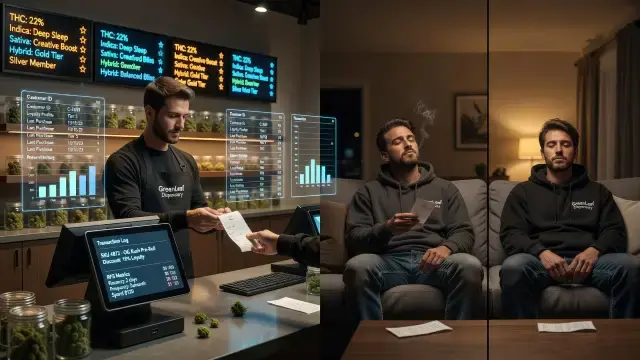
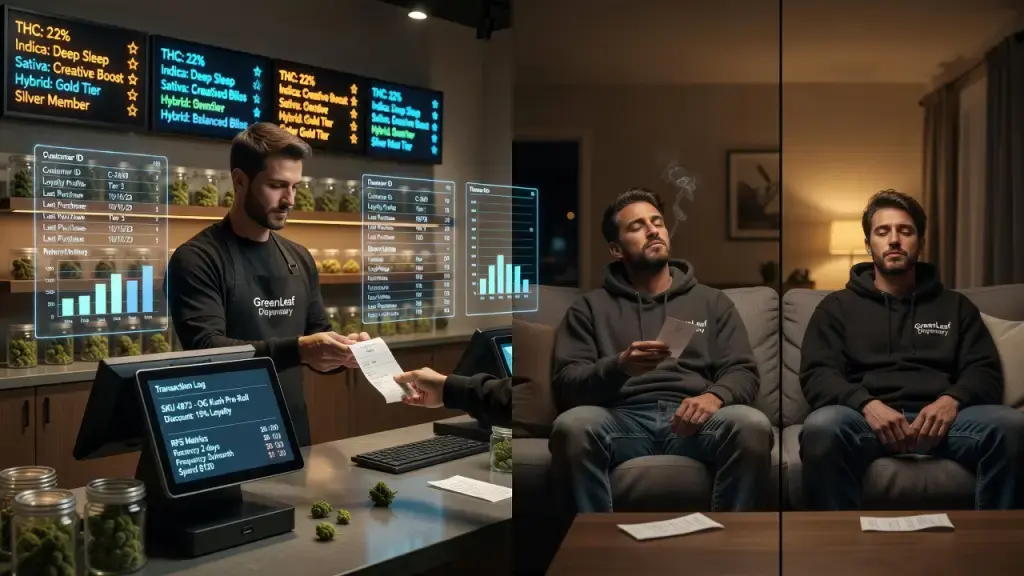
A dispensary's point-of-sale system is the most thorough record keeper in the building. It logs the SKU, the price, the discount applied, the budtender who rang the sale, and, if loyalty is enrolled, exactly who bought what and how often. For inventory counts, reorder timing, and compliance reporting, that record does its job well. What it cannot do is tell an operator whether the product worked once the customer got home.
Behavior Data Is Not Experience Data
Cannabis POS and loyalty platforms excel at recency, frequency, and spend - the classic retail trio. They flag who hasn't visited in 30 days, what categories a customer favors, and how basket size shifts by daypart. Attach a loyalty tier to all of that and you get a tidy behavioral profile. Here's the catch: every signal in that profile describes what someone did, not what happened to them. A repeat purchase is an outcome. The POS captures the outcome and nothing about its cause.
That gap is easy to miss until you line up two transactions that look identical. Same product, same Friday afternoon, same loyalty discount - same row in the database. One customer got what she wanted and will ask for that product by name next visit. The other had a flat experience, said nothing, and quietly started buying something else, or buying it somewhere else. Nothing in the receipt distinguishes them, and a 30-day recency alert will only flag the second customer after he's already gone.
Why Labels and Potency Don't Fill the Gap
The obvious fix is to assume product attributes predict experience closely enough. In practice, though, the categories retailers lean on are not as predictive as the counter conversation implies. Research examining commercial cannabis across several states found that indica, sativa, and hybrid labels do not consistently line up with the chemical profiles of the products carrying them. THC percentage isn't a clean proxy either; a University of Colorado study comparing higher- and lower-potency flower and concentrates found that blood THC levels varied widely among participants, and subjective effects did not track reliably with potency strength. Format adds another layer of variability - edibles, vapes, tinctures, and pre-rolls differ in onset and duration even for the same person. The label describes the product. It was never built to describe the customer's experience with it.
A Structural Blind Spot, Not a Software Gap
It's tempting to treat this as a feature request - bolt on a survey, add a star rating, buy another dashboard. The problem sits deeper than that. The experience in question happens off premises, after the sale closes, in a window no retail system observes. It varies by person, by product, by format, so there's no SKU-level shortcut to infer it. And the one bridge most stores actually have - a budtender who remembers what a regular said last time - is the least durable asset on the floor. Staff turnover in cannabis retail is routine; when that employee leaves, the store loses its informal memory of why its best customers keep coming back. Operators aren't short on data. Their systems just answer questions they don't need answered, while staying silent on the one that drives churn.
What Operators Can Do Without New Software
- Make the after-sale question routine: when a known customer returns, ask how the last purchase actually worked for them, not just whether they want more.
- Capture the answer in structured fields - intent (sleep, relief, focus, unwinding), outcome (yes, partly, no), and format - rather than a vague free-text note.
- Coach budtenders to recommend in outcome language first, potency and strain type second; "did it help you unwind" is answerable, "did you like the 28 percent" is not.
- Treat frequent category-switching as a possible warning sign, not just browsing behavior.
- Store what staff learn in the CRM or loyalty profile, not in one person's memory, so the knowledge survives turnover.
Where state marketing and privacy rules allow follow-up outreach, build it around the experience rather than a discount code. A message asking how a product performed earns information a retailer can act on. A coupon just earns another transaction, and teaches the store nothing about why the first one happened.
The Record That's Missing
The receipt will always be the clearest account of what sold. It will not explain why someone came back, or why they didn't. Operators who start building that second record - one structured conversation at a time - gain a view of their customer base that transaction data alone cannot produce, and they get a real shot at seeing churn coming before the customer has already moved on.