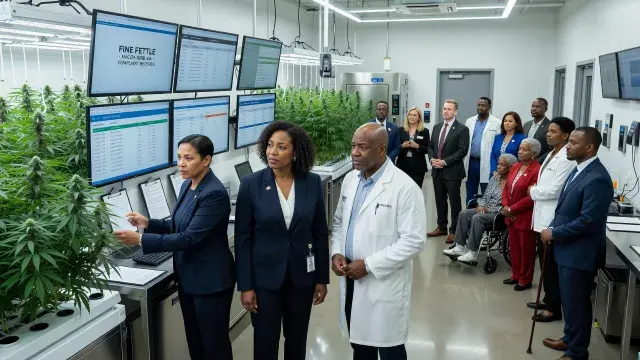
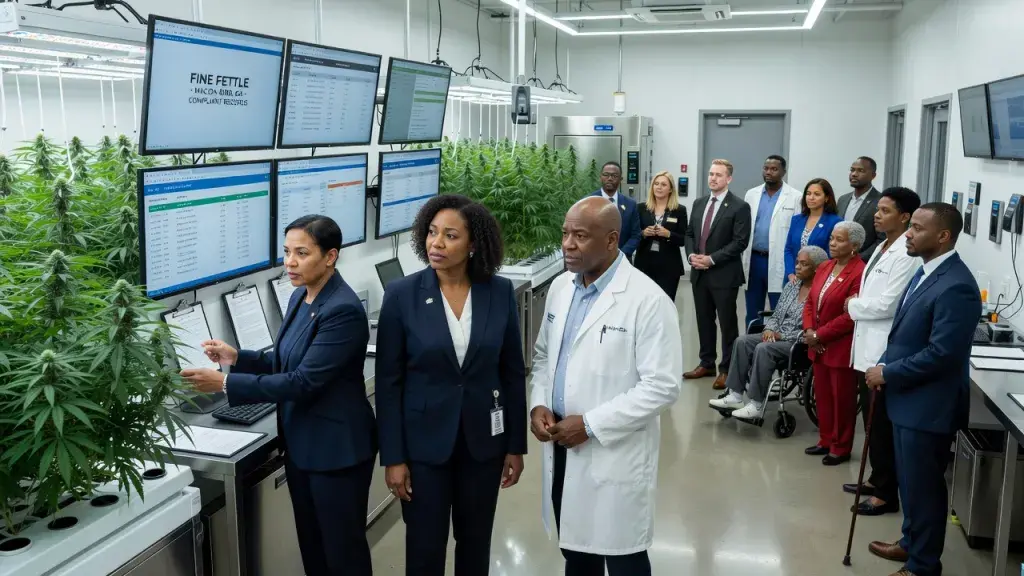
A decade after Georgia legalized medical cannabis, the program remains narrow, and the bills meant to widen it keep dying in committee. In Macon-Bibb, one of the state's three licensed medical cannabis operators is trying a different approach: get lawmakers, physicians, and patients inside the building instead of relying on floor speeches to move the needle.
Fine Fettle, which grows, manufactures, and distributes cannabis products to dispensaries under Georgia's limited license structure, hosted a facility tour aimed at demystifying how compliant medical cannabis actually gets made. That kind of transparency matters more than it sounds. Operators nationwide are under pressure to prove their seed-to-sale tracking, batch testing, and inventory controls hold up to scrutiny, whether from regulators, legislators, or skeptical neighbors. In more mature adult-use markets, operational visibility extends well past the growroom into the point-of-sale layer - dispensaries in states like Colorado, for instance, run on systems built specifically for regulated retail, and back-office tools such as cannabis dispensary pos colorado platforms illustrate how compliance recordkeeping and daily sales tracking are meant to work together once a market matures past its early, restrictive phase. cannabis dispensary pos colorado
Georgia's program has stayed tightly controlled by comparison. Only a handful of licensed producers supply the entire state, and access runs through a medical cannabis card system that supporters say is still too cumbersome for patients who qualify. State Representative Anissa Jones, who joined the Macon tour, said seeing the cultivation and manufacturing process firsthand changed her understanding of how controlled the supply chain actually is - not backyard growing, she noted, but a repeatable, monitored process meant to deliver consistent product batches.
What Stalled Bills Would Have Changed
Senate Bill 220 and House Bill 227, the most recent legislative attempts to expand the program, both stalled this session. Supporters say the bills would have eased the process for patients seeking a medical cannabis card and updated allowable product forms, potentially giving physicians more options for dosing and delivery method. Neither bill's failure was explained on the record by lawmakers in this reporting, but the pattern is familiar: expansion proposals have repeatedly failed to clear both chambers since the program's creation.
For licensed operators like Fine Fettle, a narrow product list and limited patient access translate directly into constrained wholesale volume. Vertical integration, growing, manufacturing, and distributing under one roof gives these companies more control over compliance and product consistency, but it does not solve a market-size problem created by statute. Fewer qualifying conditions and a more restrictive card process mean a smaller pool of patients moving through dispensary doors, regardless of how efficient the supply chain behind the counter becomes.
The Physician's Case for More Product Options
Dr. Elmore Alexander, who participated in the tour, framed the limitation in clinical terms. Current products can adequately treat a majority of patients, he said, but a smaller, more complex population needs additional formulations that the state's current program does not authorize. That distinction matters for compliance officers and product managers alike: expanding allowable product forms is not simply a marketing question, it is a lab testing and COA question, since new product categories require validated potency and safety documentation before they ever reach a dispensary shelf.
For now, Georgia's medical cannabis market stays small by design. Whether the legislature revisits card access or product form requirements next session will shape not just patient options, but the wholesale pricing and production planning of the three companies currently licensed to serve the entire state.