Gold Leaf Management is expanding its Speakeasy dispensary brand into Stanford, Kentucky, opening a location at 993 US-27 as the state's medical cannabis program continues its slow build-out beyond the initial wave of licensed retailers. The Stanford store gives the company another point of presence in a program still working through supply constraints, patient enrollment friction and the basic logistics of getting product from cultivator to counter. For a market this young, geography matters almost as much as inventory.
Rural access has been one of the quieter problems in Kentucky's rollout. Patients in smaller counties often face real drive times to reach a licensed dispensary, and that friction shows up in enrollment numbers before it shows up in any headline. Opening in Stanford is a fairly direct response to that gap - fewer miles between a patient and a compliant point of sale matters more than it sounds on paper. Behind the counter, though, the retail mechanics look similar across state lines: inventory has to move through seed-to-sale tracking, budroom stock has to reconcile against manifests, and the POS system has to hold up under audit. Kentucky operators building out multi-location footprints are watching how neighboring markets handle that infrastructure, and vendors serving multi-state operators point to systems built for compliant cannabis POS in Massachusetts as one template for what a heavily regulated, slow-rollout medical market eventually demands at the terminal. compliant cannabis POS in Massachusetts
The Certification Bottleneck Nobody Talks About Enough
Here's the catch with medical cannabis programs built around physician certification: the retail side can be ready before the patient pipeline is. Kentucky requires a state-issued medical cannabis card, which means a licensed practitioner evaluation, a notarized application and a state portal submission before anyone sets foot in a dispensary as a qualified patient. That's three separate friction points, any one of which can stall someone out.
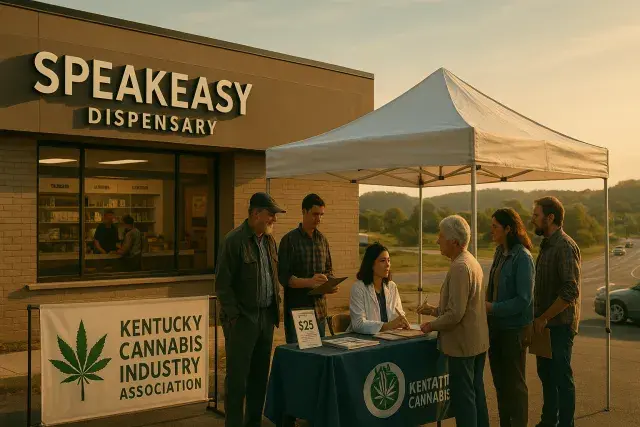
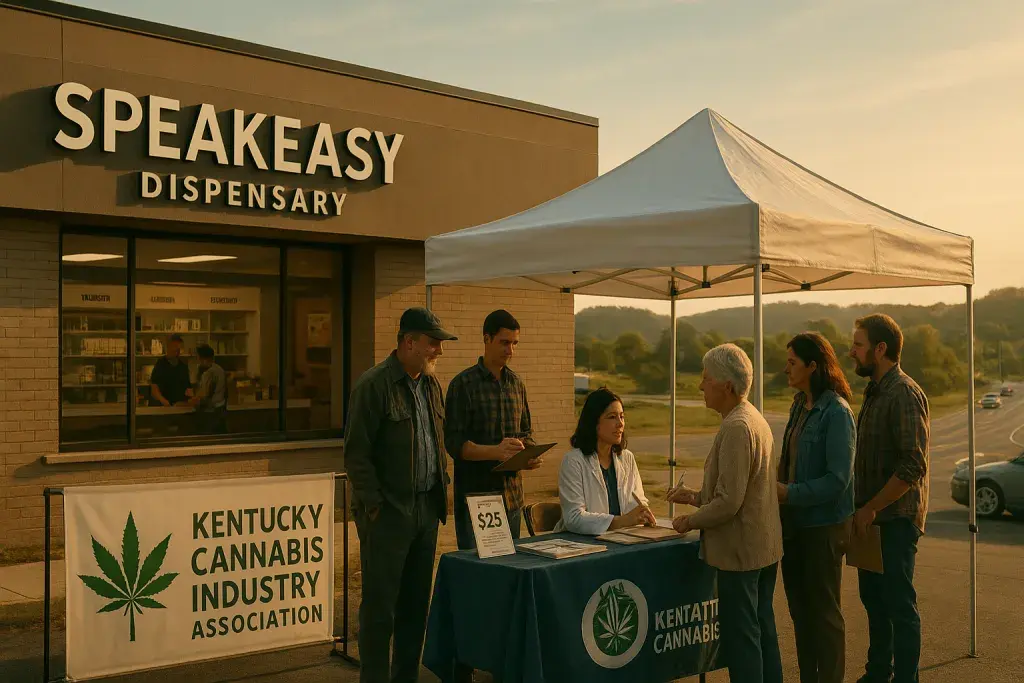
Speakeasy's opening-weekend patient drive, run in partnership with the Kentucky Cannabis Industry Association, compresses that process into a single appointment - evaluation, notary and application assistance together, for a stated $25 certification fee plus a $25 state application fee. It's a practical workaround to a bureaucratic sequencing problem, not a marketing gimmick, and it's the kind of operational partnership other dispensaries in slow-growth medical states ought to be studying.
What a New Store Signals About Program Maturity
A single storefront opening doesn't move a market. But it does say something about how operators are reading demand. Gold Leaf's decision to locate in Stanford, rather than clustering more capacity in already-served metro areas, suggests a bet on decentralized access as the program scales - flower, vapes, edibles and concentrates distributed across more towns rather than concentrated in fewer, larger stores.
That approach carries its own compliance load: more locations mean more compliant packaging checks, more lab testing coordination, more COA review at intake, and more staff trained to keep age verification and record-keeping consistent store to store. For a program still expanding its product categories, getting that consistency right matters more than store count alone.
The Access-Versus-Oversight Balance
Expanding medical cannabis access into smaller Kentucky communities raises the standard questions that come with any regulated retail buildout: are staff adequately trained on dosage education and product limits, is inventory tracked cleanly enough to satisfy state auditors, and are patients getting accurate information rather than sales pressure. None of that is guaranteed by a new address. It's earned through daily compliance discipline - the unglamorous part of the business that doesn't show up in a ribbon-cutting.
- Kentucky requires state-issued medical cannabis certification prior to dispensary purchases
- Product categories in the program include flower, vapes, edibles and concentrates, expanding as supply allows
- Rural dispensary locations reduce travel burden but add pressure on consistent compliance execution across sites