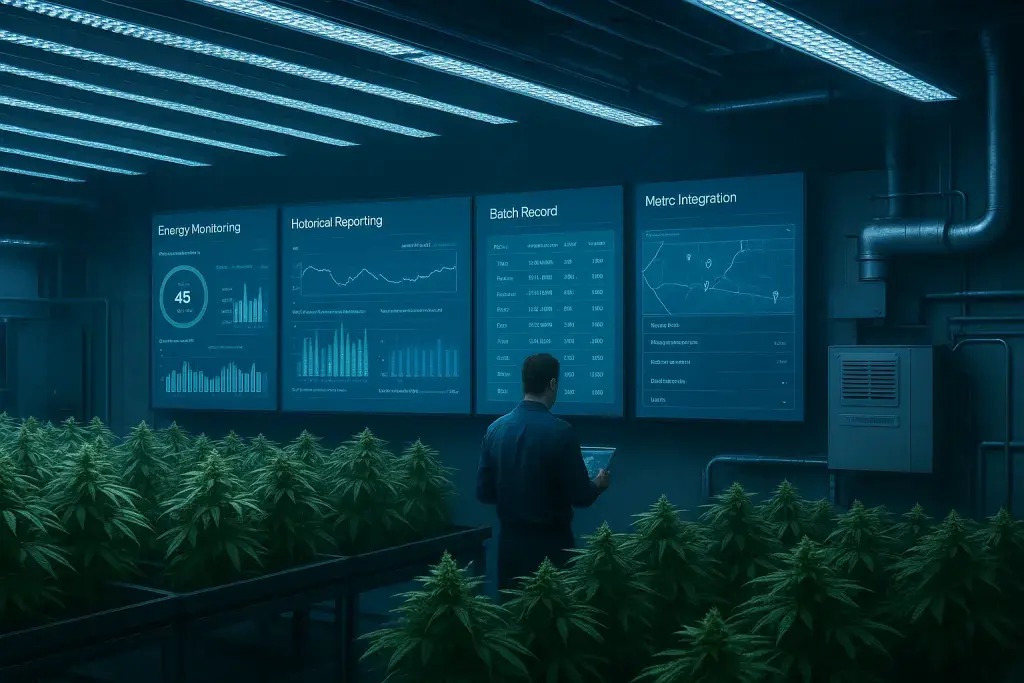
TSRgrow is rolling out a significant expansion of GROWHub, its cultivation management platform, adding energy monitoring, batch-record tools, Metrc integration and building-system connectivity ahead of 2026. The update pushes the software well beyond lighting control and into territory that touches compliance, facility operations and long-term crop planning all at once. For commercial cultivators juggling separate systems for environmental monitoring, energy tracking and regulatory recordkeeping, that consolidation is the actual story here.
The mechanics matter more than the marketing language suggests. GROWHub already served as the intelligence layer behind TSRgrow's LED lighting and Remote Power infrastructure, letting growers build lighting recipes by room, zone, rack or cultivar. What changes in 2026 is the addition of expanded analytics, historical reporting and a direct pipeline into Metrc, the track-and-trace system most state cannabis programs rely on. That's a meaningful shift for operators who currently reconcile cultivation logs against compliance software by hand - a process that, frankly, invites errors and eats staff hours that could go toward actual plant work. Multi-state operators watching state-by-state technology requirements evolve, including those relying on POS software for Montana cannabis retailers to manage retail-side compliance, understand the value of systems that talk to each other instead of existing in silos. POS software for Montana cannabis retailers
Batch-record functionality deserves particular attention. Cultivation compliance has historically lived in a strange middle ground: growers track environmental conditions and feeding schedules in one place, then reconstruct that history separately when regulators or auditors come asking. Tying batch records directly to the systems that controlled the grow - rather than recreating that data after the fact - gives operators a cleaner audit trail. In practice, though, the real test will be how well GROWHub's Metrc integration holds up across differing state reporting requirements, since track-and-trace rules are not uniform from one jurisdiction to the next.
Energy Data as an Operational Lever, Not Just a Utility Bill
Indoor cultivation is an energy-intensive business, and lighting typically represents one of the largest line items on a facility's utility bill. By pairing energy monitoring with cultivation and environmental data through Remote Power, GROWHub lets growers see how specific lighting strategies or production schedules translate into energy costs - not after the fact, but as part of the same operational picture used to manage the crop. That's a different posture than treating energy as a fixed cost to be endured. Expanded Building Management System connectivity extends that logic further, letting cultivation data exchange with HVAC, dehumidification and other facility systems rather than requiring separate dashboards for each.
Compliance Pressure Is Building, Not Easing
The timing is not incidental. Cannabis operators are bracing for more regulatory scrutiny, not less, as federal rescheduling discussions continue and states tighten track-and-trace enforcement. Reliable, traceable cultivation records - the kind that hold up during an audit rather than requiring reconstruction after a request - are becoming a baseline expectation rather than a nice-to-have. Software vendors across the industry, from cultivation platforms to retail POS providers, are converging on the same idea: compliance data generated as a byproduct of daily operations is more trustworthy than compliance data assembled after the fact.
None of this changes the underlying discipline cultivation still requires. Software can organize data and flag inconsistencies, but it does not substitute for sound cultivation practice, proper lab testing protocols downstream, or accurate recordkeeping culture on the floor. What platforms like GROWHub offer is a narrower gap between what actually happened during a crop cycle and what gets documented - which, for an industry still maturing its compliance infrastructure, is no small thing.