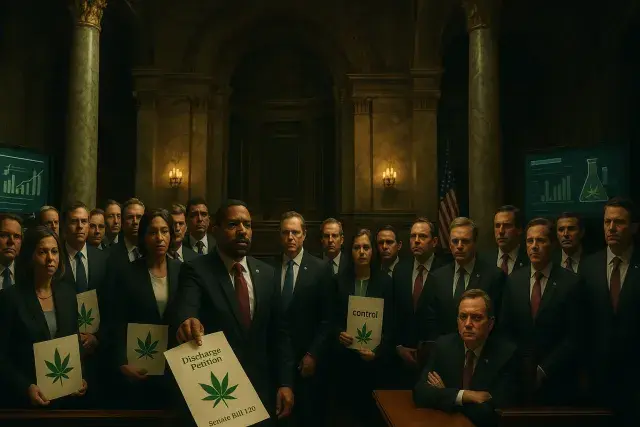
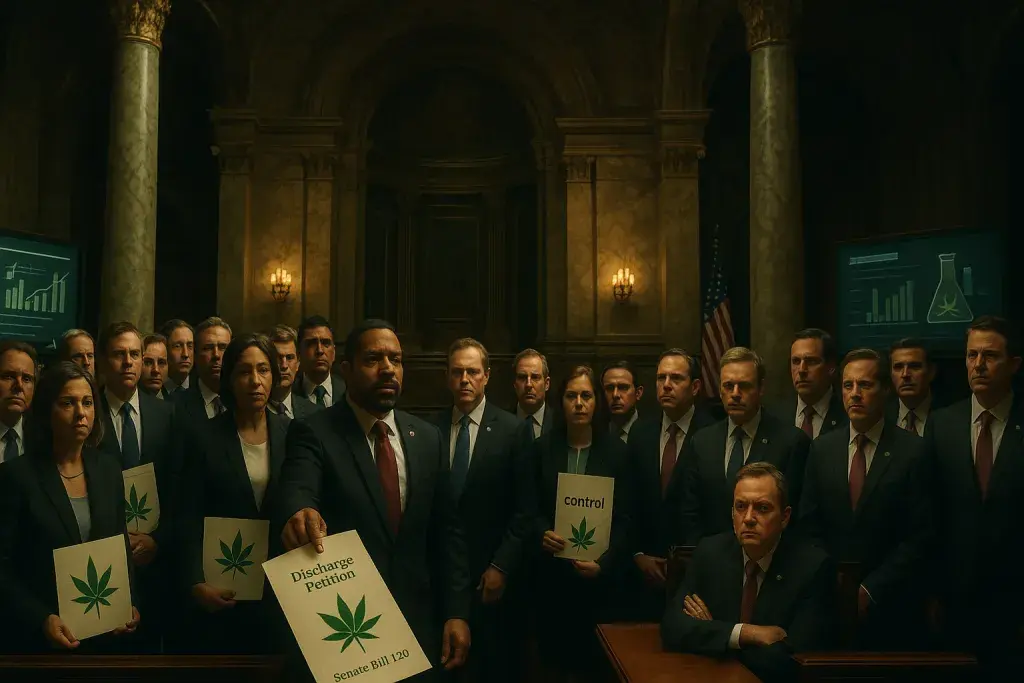
Pennsylvania's adult-use cannabis legalization effort got an unexpected jolt Monday when all 23 Democratic state senators filed a discharge petition to yank Senate Bill 120 out of committee and force a floor vote. The bill has sat without a committee hearing for nearly a year. Whether the maneuver actually produces a vote - let alone a law - depends almost entirely on Republican leadership that has shown little appetite for the issue.
SB 120 is a bipartisan proposal, co-sponsored by Democratic state Sen. Sharif Street and Republican state Sen. Dan McLaughlin. That's a meaningful data point: bipartisan authorship in a chamber this divided doesn't happen by accident, and it signals that at least some appetite for legalization exists across the aisle. Still, the math is unforgiving. Republicans hold 27 seats to Democrats' 23, meaning the discharge petition ultimately lands in the hands of Senate Majority Leader Joe Pittman - an outspoken cannabis skeptic who controls whether any floor vote gets scheduled. Operators and investors watching adjacent markets like Pennsylvania's neighbors have reason to pay attention; states that have successfully built regulated adult-use systems, from Illinois to New Jersey to those with mature retail infrastructure like cannabis pos maine markets further north, all passed through exactly this kind of protracted political bottleneck before the regulatory apparatus and retail economy could take shape.
A discharge petition is a rarely deployed parliamentary tool - an escalation, not a guarantee. Under Pennsylvania Senate rules, even a successful petition still requires the majority leader to schedule the vote. Pittman has already signaled, including after President Trump's December executive order, that he remains uninterested in recreational cannabis. That means Democrats have created pressure and public accountability, but they have not unlocked the chamber door. The discharge petition puts every senator's position on record. That's politically useful, even if it doesn't move the bill one inch.
What's Actually Stalling in Harrisburg
The immediate context matters here. Pennsylvania's Senate adjourned for the July 4 recess without completing the state budget - a significant failure of basic governance that has consumed most of the political oxygen in Harrisburg. Cannabis legalization, in that environment, reads to many Republican legislators as a secondary distraction at best. Democratic Gov. Josh Shapiro has repeatedly argued that adult-use tax revenue would help close the state's fiscal gap, and that argument is substantive: states with mature adult-use markets have collected meaningful excise tax revenue that flows into general funds, education programs, and public health infrastructure. But a revenue argument, however sound on paper, doesn't move a majority leader who is philosophically opposed to the underlying policy.
The Pennsylvania Cannabis Coalition framed Monday's move in consumer-protection and market-structure terms - emphasizing that a regulated adult-use market replaces illicit sales with a compliant framework that includes lab testing, compliant packaging, age verification, and seed-to-sale tracking. That's the standard and accurate argument for regulated retail over gray and black market supply chains, and it carries real weight from a public-health standpoint. Whether it carries weight in the Republican caucus is a different question entirely.
What the Business Community Is Actually Watching
For dispensary operators, multi-state operators with Pennsylvania medical cannabis licenses, and suppliers already positioned in the state's medical market, SB 120's fate carries direct operational implications. Pennsylvania already has a functioning medical cannabis program with licensed dispensaries, growers, and processors. An adult-use transition - should it ever come - would trigger a significant regulatory overhaul: new license categories, revised excise tax structures, updated point-of-sale compliance requirements, expanded inventory tracking obligations, and likely a period of provisional adult-use sales through existing medical licensees while a new retail framework is built out.
None of that happens fast. States that have legalized adult-use cannabis have generally needed 18 to 24 months - sometimes longer - between legislation and first retail sales, as regulators write rules, issue licenses, and audit operators for compliance readiness. For brands and wholesalers eyeing Pennsylvania as an adult-use market, the discharge petition is a signal to watch, not a trigger to act.
Here's the practical reality: until Majority Leader Pittman schedules a vote, SB 120 stays where it has been for nearly a year - in limbo. Democrats have raised the political cost of inaction and forced a public position from every senator. That's not nothing. But it's also not legalization. Pennsylvania's adult-use market remains, for now, a projection rather than a pipeline.