Chanda Macias, CEO of National Holistic Healing Center in Washington, D.C., is not waiting for federal regulators to tell her what a medicalized cannabis dispensary should look like. She is already building it. Driven by the U.S. Justice Department's reclassification of state-licensed medical marijuana from Schedule 1 to Schedule 3 of the Controlled Substances Act, Macias is repositioning her operation - staffing, software, recordkeeping, supply chain - around pharmaceutical standards rather than conventional retail models.
That repositioning has direct implications for every layer of the medical cannabis supply chain: cultivators, manufacturers, distributors, retailers, and the software vendors that serve them. Operators who run dispensaries like general retail stores - focused on brand assortment, consumer experience, and SKU velocity - may find themselves structurally unprepared for what Schedule 3 eventually demands. Compliance infrastructure that works fine in a state-regulated adult-use context may fall short under a more medicalized federal framework. It is worth noting for operators in newer regulated markets that even tools like compliant cannabis POS in Montana will eventually need to account for patient privacy, outcome tracking, and clinical recordkeeping as federal standards tighten around medical licenses. The gap between retail-grade and pharmacy-grade compliance is not trivial, and closing it takes time and capital.
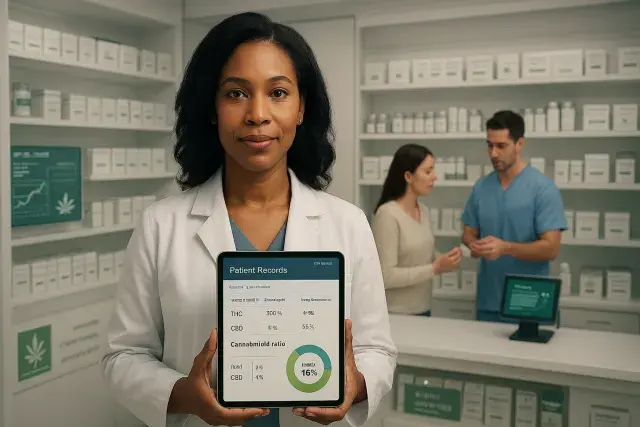
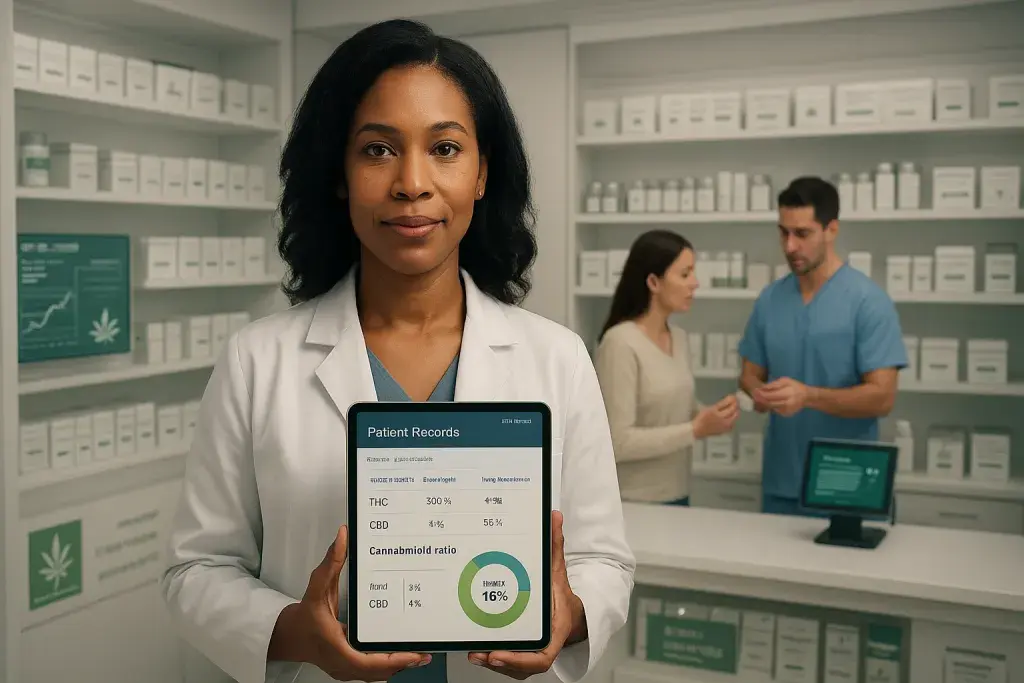
Macias, who holds a Ph.D. in cellular biology from Howard University and brings a background in cancer research, has long treated medical cannabis as a healthcare discipline rather than a retail category. Her operation already runs under HIPAA compliance requirements, with HIPAA-certified software - an unusual standard for a state-licensed dispensary. Under a Schedule 3 environment, she expects those standards to become explicit requirements, not voluntary ones, covering patient conditions, qualifying illnesses, treatment history, and outcomes in formal patient records.
What Pharmacy Standards Actually Mean for Dispensary Operations
The practical shift Macias describes is substantial. Budtenders functioning as pharmacy technicians is not a cosmetic change - it implies formal training, documented competency, defined clinical protocols, and accountability structures that most cannabis retail operations do not currently have. Store managers would need to apply pharmacy-style inventory controls and documentation. Manufacturers and cultivators would need cannabis-specific standard operating procedures aligned with FDA good manufacturing practice principles. Distributors would need to evaluate whether their licenses and operating procedures can satisfy stricter pharmaceutical-style chain-of-custody requirements.
Macias is already mapping those gaps in her own business and is not waiting for statutory requirements to act. "The pharmaceutical infrastructure already exists; the industry is adapting it to accommodate cannabis," she said. The framing matters: this is not about building a new compliance regime from scratch. It is about translating existing FDA GMP and good distribution practice frameworks into cannabis-specific applications - a process she is actively undertaking, including through her GDP authorization in Germany, where she is authorized to distribute medicinal products across Europe.
Product selection, too, would change. Rather than organizing a dispensary floor around brands, effects categories, or flavor profiles, Macias expects medical cannabis menus to be organized around ingredient composition, cannabinoid ratios, dosage forms, and dosage strength. A physician prescribing for a specific condition might specify a cannabinoid profile or an approved formulation rather than a branded product. That is a meaningful shift for how manufacturers position products and how retailers merchandise them.
Software Vendors and Ancillary Companies Face New Demands
One of the less-discussed pressure points in this transition is the technology stack. Dispensary point-of-sale systems, seed-to-sale tracking integrations, and customer relationship management tools were largely built around state compliance requirements - METRC reporting, inventory reconciliation, age verification, compliant packaging documentation. Most were not designed to manage patient health records, clinical outcome tracking, or HIPAA-level data security at scale.
Macias acknowledged that software companies are working to figure out how to support the compliance demands of a more medicalized system. That is an understatement. The architectural difference between a retail POS and a HIPAA-compliant patient records platform is significant. Vendors that want to serve medical cannabis operators in a Schedule 3 environment will need to invest in that infrastructure - or risk losing that segment of the market to healthcare-native software companies that already operate under clinical standards.
States that currently mandate pharmacist presence in medical marijuana dispensaries - Arkansas, Connecticut, Minnesota, New York, and Pennsylvania among them - may represent an early preview of where federal expectations land. Macias is building ahead of that curve through a pharmacist training program with Howard University and the Society of Cannabis Clinicians, with a curriculum covering the endocannabinoid system, pain, women's health, multiple sclerosis, and cannabinoid-terpene interactions. The goal is to help licensed pharmacists apply existing clinical knowledge to cannabis care rather than train from zero.
Consolidation, Big Pharma, and What Small Operators Should Do Now
The honest read on this transition is that not every medical cannabis operator will make it through intact. Upgrading a dispensary to pharmacy-grade compliance - new software, clinical staff, facility modifications to meet GMP standards, formal SOPs throughout the supply chain - requires capital and organizational capacity that smaller licensees may not have. Macias anticipates a consolidation wave, and she is specific about its character: not a round of MSO acquisitions, but pharmaceutical-industry entry into the space.
"Big Pharma is already gearing up," she said. Companies with existing GMP-certified manufacturing, established distribution networks, and deep compliance infrastructure would have an advantage if Schedule 3 ultimately imposes pharmaceutical-style requirements on medical operators. That could squeeze independent medical dispensaries that cannot finance the transition on their own timeline.
Germany offers a working preview. Medical cannabis is legal nationally there, healthcare coverage is available for some cannabis medicines, and the distribution framework operates under pharmaceutical rules. Macias entered that market in 2024. She sees it as a model for what U.S. medical cannabis eventually looks like - including the possibility of insurance reimbursement for certain formulations, though that pathway in the United States depends on regulatory decisions that have not yet been made.
Her advice to medical operators is direct: do not wait for final federal guidance, but begin the gap analysis now. Review state pharmacy rules. Assess what facility and staffing changes would be required to run a dispensary under a pharmacy compliance model. Evaluate whether your manufacturing partner could meet FDA GMP expectations. Determine whether your current software vendor can support HIPAA-compliant patient records. The operators who start that work today will have more options - and more time - than those who wait for a compliance deadline to force the question.
Cannabis is not about to become a pharmacy overnight. But for medical operators, the direction is clear enough to act on.