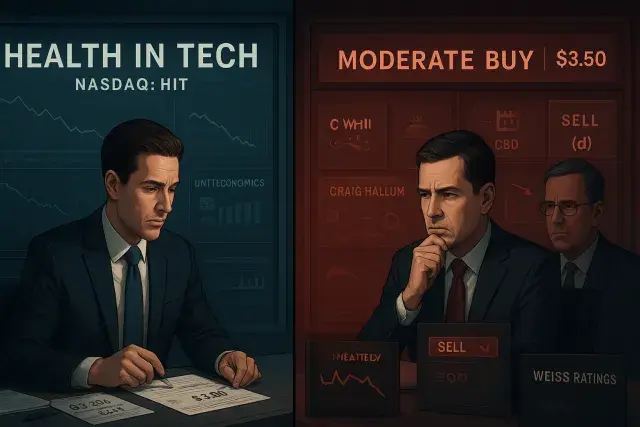
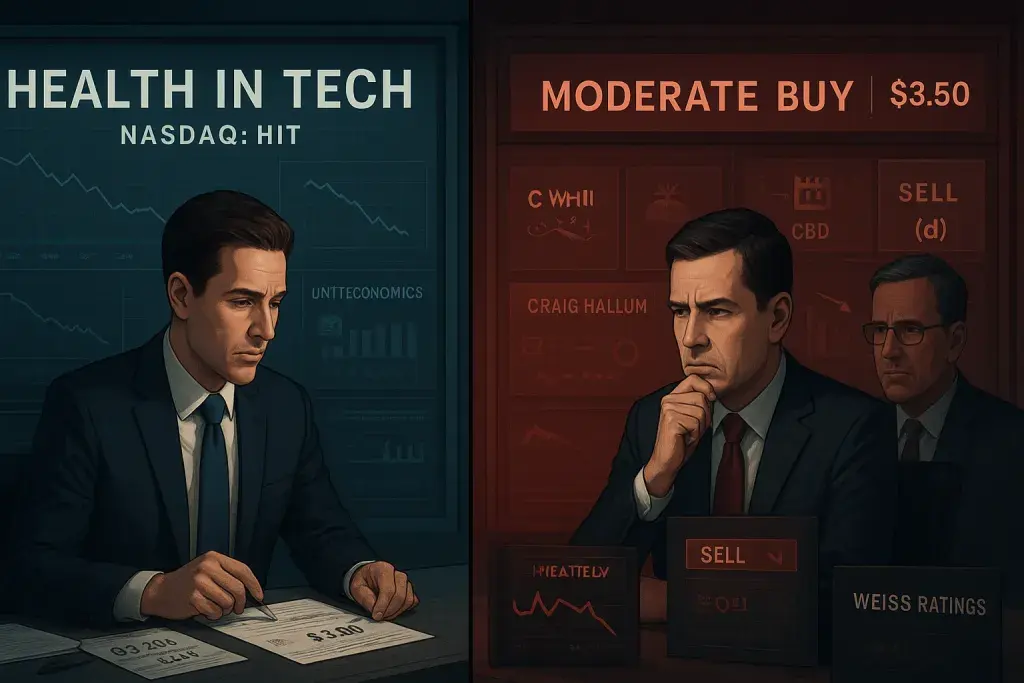
Wall Street's coverage of Health In Tech, Inc. (NASDAQ: HIT) is thin but pointed, and the latest estimates suggest the insurance-technology company won't turn a profit anytime soon. Maxim Group analyst A. Klee issued fresh Q3 2026 projections on Friday, August 14th, forecasting a per-share loss of $0.04 for the quarter, with a "Buy" rating and a $3.00 price target attached. The forecast run extends well into 2027, painting a picture of a company still working through the cost structure that comes with scaling a health-tech distribution platform.
Health In Tech operates outside the cannabis retail space directly, but its story is instructive for anyone tracking how specialty tech platforms serving regulated or semi-regulated health markets get valued by analysts before they're consistently profitable. The same due-diligence questions that come up when evaluating a health-tech insurance platform - unit economics, customer acquisition costs, path to breakeven - apply just as much to point-of-sale and compliance software vendors serving cannabis and adjacent categories. Retailers evaluating a cbd point of sale new jersey system, for instance, face similar questions about vendor financial stability before locking into a multiyear software contract that touches inventory, tax reporting, and payment processing. cbd point of sale new jersey
What the Numbers Actually Say
Maxim's model has Health In Tech posting losses through most of the forecast window: $0.04 per share in Q3 2026, $0.03 in Q4 2026, and a full-year 2026 loss of $0.10. The picture brightens slightly heading into 2027 - a projected $0.01 profit in Q1, a small loss in Q2, breakeven in Q3, and a modest loss in Q4, netting a full-year 2027 loss of $0.02 per share. That's not a company in crisis. It's a company still burning cash while it builds out its platform, which is fairly normal for early-stage health-tech names but worth flagging plainly rather than dressing up.
Here's the catch with single-analyst coverage: one firm's model carries outsized weight when there isn't a broader consensus to lean on. Maxim's $3.00 target sits below the stock's current consensus average of $3.50, a gap that itself tells you something about how unsettled the sell-side view still is.
A Divided Analyst Bench
The disagreement among covering analysts is not subtle. Craig Hallum initiated coverage in April with a "Buy" rating and a $4.00 target - the most bullish call on record. Wall Street Zen moved in the opposite direction days earlier, downgrading the stock from "hold" to "sell." Weiss Ratings, meanwhile, has held a "sell (d)" rating since restating its position in late June. MarketBeat's aggregation puts the stock at a "Moderate Buy" consensus with that $3.50 average target, but the underlying picture is one strong buy, one buy, and one outright sell - not exactly a unified read.
- Maxim Group: Buy rating, $3.00 price target
- Craig Hallum: Buy rating, $4.00 price target
- Wall Street Zen: Sell rating (downgraded from Hold)
- Weiss Ratings: Sell (d) rating, restated
Why This Matters Beyond the Ticker
For operators and technology buyers in adjacent regulated markets, the lesson isn't about this one stock. It's about how thinly covered small-cap health-tech and compliance-adjacent companies get priced when analyst opinion is split and forward earnings stay negative for several more quarters. Investors weighing a position, and business partners weighing a vendor relationship, are both making a bet on execution against a loss-making runway - not a settled growth story. That distinction matters whether the platform in question handles insurance distribution or handles compliant transaction processing for a licensed retailer.